Polycultural Intelligence: Eight Rules for Connecting with Generation Alpha
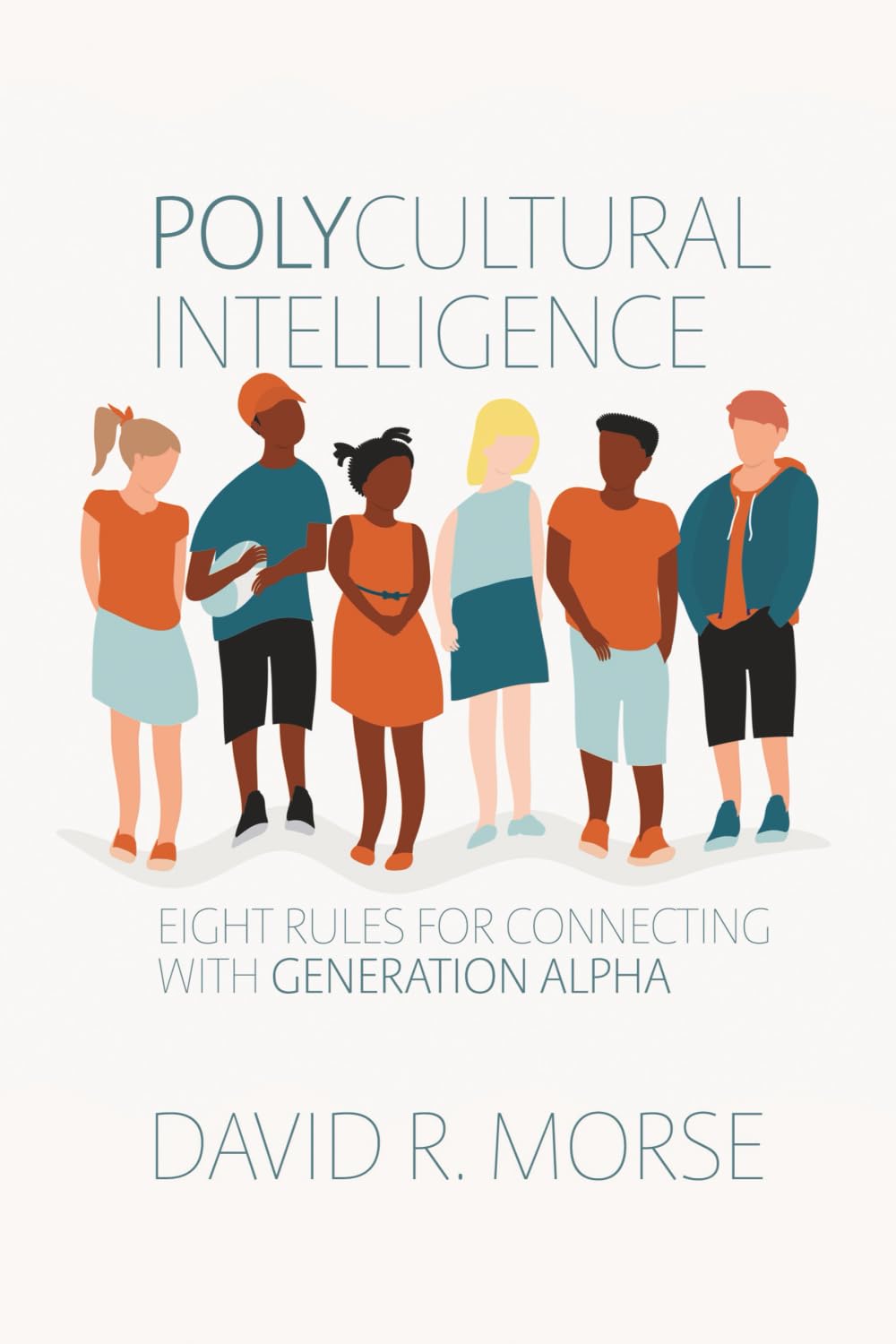
Polycultural Intelligence: Eight Rules for Connecting with Generation Alpha is available at:
Amazon and
Paramount Books.
ISBN-10: 194168890X
ISBN-13: 978-1941688908
Generation Alpha is not waiting in the wings. They’re already shaping households, shifting markets, and rewriting cultural expectations, often with a sophistication that belies their age. Their annual impact on household spending is estimated at over 500 billion dollars. Not future influence, but real-time market power.
Young Americans born between 2010 and 2025 live in a world that is layered, plural, and self-authored. They shape culture through the rhythm of their lives—language, symbols, gestures, and choices that ripple quietly across platforms and communities. Their cultural worlds unfold through what they create, what they remix, and what they ignore.
Gen Alpha kids inhabit a polycultural world that informs how they see, how they relate, and how they choose to belong. For those hoping to understand or connect with them—in classrooms, boardrooms, or at kitchen tables—a shift in perspective will be required. Whether you’re a marketer, a teacher, a parent, a creative director, or a student, you can expect to find something in these pages worth carrying with you. Not conclusions, but ideas. Not prescriptions but starting points.
Their future isn’t colorblind. It’s color-aware, gender-aware, culture-aware, and remixing all of it in real time. Gen Alpha doesn’t want spokespersons. They want co-conspirators. They prefer participation over polish. They trust the weird, the real, the remixable. And sometimes, the surreal. They speak a language of inside jokes, cultural fluency, and shared rhythm. If you get it, you belong.
Morse’s Eight Rules of Polycultural Intelligence provide a foundation for understanding and engaging with the ever-growing number of families raising polycultural kids—kids who jump between languages and cultures, who belong to more than one category, and often resist them all. This book will help you understand how these kids differ from generations that came before them and how their polycultural worldview will reshape America in the years ahead.
To learn more, here’s a video on “Understanding Generation Alpha” that I produced with my colleagues at New American Dimensions, which features my two daughters:
Watch the video summary of the book here:
Sometime in early 2025, I felt the pull to write another book. Things had gotten ugly in America. The tone of public life was harsher, less generous, and more brittle than it had been in years. After decades of working in multicultural marketing, I began thinking it might be time to write a second book in that lineage, one that took on multicultural marketing in the age of Trump directly and without euphemism.
I called my publisher, Jim Madden, and pitched the idea. He listened, as he always does, and then offered a piece of advice that changed the direction of the project entirely. Do not write about what is happening right now, he said. It will change soon enough. Write about the future.
Then he added something that made the path suddenly obvious. Focus on Generation Alpha. You already have the best research subjects you could ask for. You have the girls.
Jimmy and I are at the cusp between the Baby Boomers and Generation X. We grew up watching one America give way to another, and then another after that. Every day, we carry the memory of multiple cultural eras, each with its own rules, blind spots, and assumptions. That long arc matters. It gives perspective. It also makes change easier to see when it arrives.
Ruby was fourteen. Sophia was thirteen. Every day, we could see the distance between the world we grew up in and the one they were inhabiting. Not in theory. In practice. In how they talked, who they moved easily among, what they noticed, and what they found unremarkable.
Ruby and Sophia were growing up in a world that barely resembled the one I knew as a child. Their friends came from everywhere. Their humor, music, games, language, and references moved easily across cultures. Identity was not something they paused to define or defend. It was contextual and lived.
They read the world instinctively, almost like it was a language they were born knowing.
The more closely I watched, the clearer it became that the future I had been worrying about was already forming right in front of me. While adults argued endlessly about what felt broken, this generation was quietly building something workable. Not perfect. But coherent. Humane. Grounded.
Generation Alpha is the first American generation to be majority non-White. That fact alone reshapes the future. What struck me just as powerfully was how ordinary that reality felt to them. They are not learning to navigate diversity. They are growing up inside it. Culture is not a set of lanes. It is a shared, overlapping space.
Authenticity matters to them. Inclusion is not a performance. Kindness is not framed as sacrifice. These are functional values. They reduce friction. They make life easier to navigate.
Watching Ruby and Sophia grow up has been the most meaningful education of my life.
Jimmy and I have had the privilege of seeing young people who notice who is included and who is missing. Who expect fairness to be real rather than symbolic. Who assume belonging is possible. That assumption alone changes the equation.
This could not be another book about multicultural marketing as I had written it before. Multicultural Intelligence was about recognizing difference. What I was seeing now was a generation for whom cultural overlap was unremarkable. That shift is where polycultural intelligence begins.
Once I stopped trying to write the book I initially imagined, and instead paid attention to the book that wanted to be written, the shape became clear. That is how Polycultural Intelligence: Eight Rules for Connecting with Gen Alpha came into being.
The book is dedicated to Ruby and Sophia because they are not just my daughters. They are my teachers. They remind me daily that the future is not abstract. It has names, opinions, humor, impatience, and a seat at the dinner table.
At this stage of life, writing is no longer about reacting to the moment. It is about taking the long view. Listening closely when something genuinely new appears. Trusting what you see.
That is why I wrote this book.
Prologue: The Reinventors
Part One: The Inheritance
Generations in Transition
Generations Divided
Part Two: Generation Alpha and Polycultural Identity
Generation Alpha
Who They Are
How They Grow Up
Where They Live (Onscreen)
Where They Live (Offscreen)
Who They Are Becoming?
Why They Matter
Polycultural Identity
From Multicultural to Polycultural
Black Gen Alpha
Hispanic Gen Alpha
Asian American Gen Alpha
LGBTQ+ Gen Alpha
Intersectionality and the Mixed-Race Future
Part Three: The Eight Rules of Polycultural Intelligence
#1 Lead with Identity, Not Demographics
#2 Design for Play
#3 Build for the Intersection
#4 Speak Fluent Gen Alpha
#5 Representation Without Relationships Is Tokenism
#6 Belonging Is the New Brand Loyalty
#7 Trust Is Crowdsourced
#8 Be the Spark, Not the Script
Conclusion: The Age of Becoming
Epilogue: What Comes Next
Sources
About the Author
Polycultural Intelligence: Eight Rules for Connecting with Generation Alpha by David A. Morse has given us a vocabulary for something many of us have sensed, but until now, could not fully articulate.
Polycultural Intelligence is not simply a book about Generation Alpha. It is a book about the future of human identity—and the urgent need for institutions, leaders, and storytellers to evolve alongside it. Morse makes a compelling case that Generation Alpha is the first truly polycultural generation. These young people do not inherit identity in neat, singular categories. They construct it dynamically, drawing simultaneously from family heritage, national identity, digital culture, and a globalized peer network. For them, identity is not fixed. It is layered, fluid, and deeply personal.
What makes this book especially powerful is Morse’s recognition that authenticity—not authority—is now the defining currency of influence. Generation Alpha does not grant automatic trust to institutions, titles, or credentials. They respond to lived experience. To honesty. To emotional truth.”
—Tony Hernández, Documentary Filmmaker, Founder of Immigrant Archive Project